
The Complete Guide
The Tournament
Pyramid
From the Grand Slams at the top to Futures at the bottom — how the professional tennis calendar is structured and what each level means.
The Hierarchy
Professional tennis has a strict tournament pyramid. Higher levels mean more ranking points, bigger prize money, and stronger fields.
Grand Slams
4 per year · Best of 5 sets · 128 draw
Masters 1000
9 per year · Best of 3 · 56–96 draw
ATP 500
13 per year · Best of 3 · 32–48 draw
ATP 250
~40 per year · Best of 3 · 28–32 draw
Challengers & ITF
~150+ per year · Pathway to the main tour
Grand Slams
The four biggest tournaments in tennis. Winning all four in a career is called the Career Grand Slam — only 8 men have done it.
The Big Four
The pinnacle of professional tennis — 2 weeks, 128 players, best of 5 sets
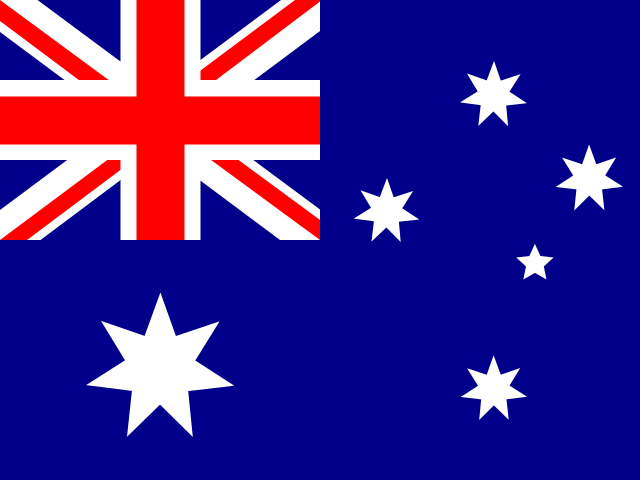 Australian Open · January · Hard
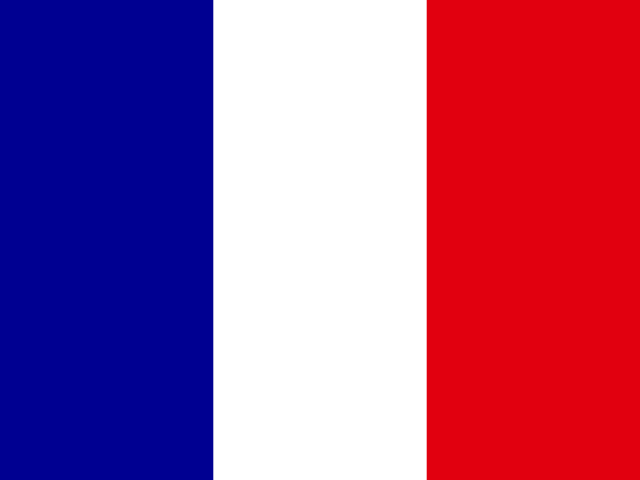 French Open · May · Clay
 Wimbledon · July · Grass
 US Open · August · Hard
Grand Slams are run by the ITF, not the ATP. They have their own traditions — Wimbledon's all-white dress code, Roland Garros's red clay, the US Open's night sessions. Best-of-5 sets means more upsets get overturned and the fittest, most resilient players rise to the top.
Masters 1000
The nine mandatory tournaments that form the backbone of the ATP calendar. Top players are required to enter.
The Mandatory Nine
Required attendance for top-30 players — major ranking implications
Indian Wells · MarchMiami · March Monte Carlo · April
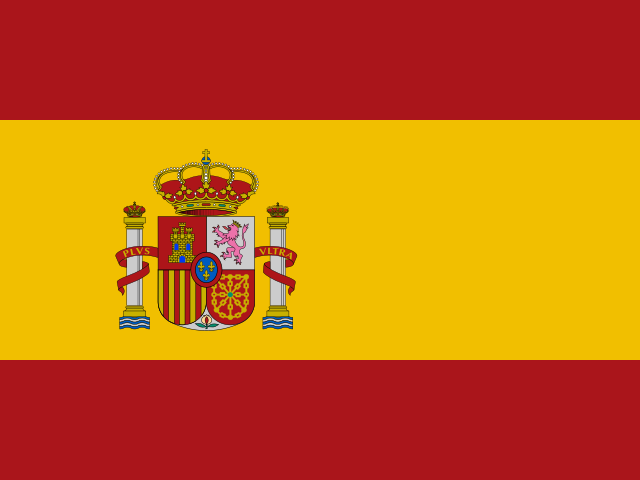 Madrid · May
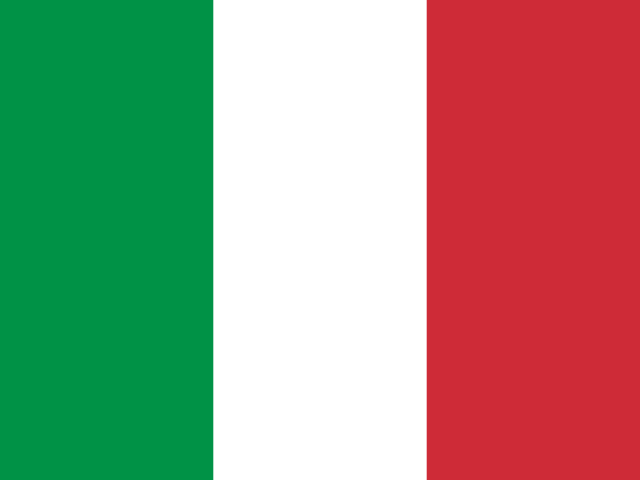 Rome · May
 Canada · AugustCincinnati · August
 Shanghai · OctoberParis · November
Indian Wells and Miami (the "Sunshine Double") have 96-player draws, making them nearly as big as Slams. The clay Masters (Monte Carlo, Madrid, Rome) serve as the key build-up to the French Open. Top players who skip a mandatory Masters receive a 0-pointer — it counts against their ranking.
ATP 500 & 250
The foundation of the tour calendar. Where rising players make their mark and veterans pick up points between the big events.
The Mid-Tier
Top players must enter at least 4 per year · Strong fields
 Rotterdam
 Dubai
Dubai AcapulcoBarcelonaQueen's
 HalleHamburgWashingtonBeijing
 Vienna
 Basel
Basel Rio
Rio Tokyo
TokyoThe Starting Point
~40 events worldwide · Where the tour begins each week
ATP 250s are the most common tournament type. They fill the weeks between bigger events and are where lower-ranked players build their ranking. Events like Brisbane, Adelaide, and Doha open the season each January.
The LowerTours
Below the main ATP Tour is a pipeline of smaller events where the next generation of stars develop.
The Development Pathway
Where careers begin — and where injured veterans rebuild their rankings
ATP Challengers are the second tier — think minor league baseball. Prize money ranges from $50K to $175K. ITF Futures (now "M15/M25" events) are the lowest rung of professional tennis. A player ranked #300 might play a mix of Challengers and ATP 250 qualifiers, grinding their way up one small batch of ranking points at a time. It's an incredibly tough financial grind — most players at this level lose money touring.
Draw Sizes
Bigger tournaments have bigger draws — which means more rounds, more matches, and a harder path to the title.
Why Draw Size Matters for Predictions
In a 128-draw Grand Slam, the #1 seed plays 7 matches over 2 weeks. That's 7 chances for an upset. In a 32-draw ATP 500, they play just 5. Bigger draws create more variance — which means sharper predictions when you account for resilient favorites and dangerous floaters.
Special Events
A few prestigious events sit outside the normal tournament pyramid.
The Season Calendar
A full ATP season runs from January to November. Here's when the biggest events happen.
Australian OpenRotterdamDubaiRioIndian WellsMiamiMonte CarloBarcelonaMadridRomeFrench OpenQueen'sHalleWimbledonHamburgCanadaCincinnatiUS OpenBeijingTokyoShanghaiViennaBaselParisATP FinalsPredict Every Tournament
Get match predictions and track results across every level of the ATP Tour.
View Predictions →